

The Detroit Red Wings finally closed one long-standing chapter by raising Sergei Fedorov’s 91 to the rafters this week. It felt like a healing moment for a franchise that spent years pretending one of its most transcendent stars never existed.
Now comes the harder part. Because once you start telling the whole story of Red Wings hockey again, three more numbers begin to glow from the ice: 13, 40 and 16.
Pavel Datsyuk. Henrik Zetterberg. Vladimir Konstantinov.
They aren’t just great former players. They are the connective tissue between eras. They are the bridge from dynasty to identity. They are the reason “Red Wings hockey” still means something specific in 2026.
And if the rafters are meant to tell the story of this franchise, those stories are incomplete without them.
No. 91, forever in the rafters in Detroit ❤️
— NHL (@NHL) January 12, 2026
Congratulations, Sergei Fedorov! pic.twitter.com/UG6wU2Lu1U
3 Red Wings legends who should be next in line for number retirement
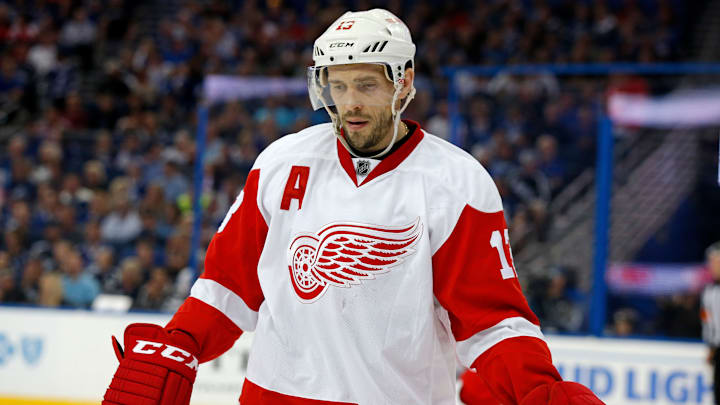
Pavel Datsyuk (No. 13)
Every franchise gets stars. Very few get mythology.
Pavel Datsyuk wasn’t just elite — he was singular. There has never been another player who fused creativity, defensive dominance, and puck control the way he did. “Datsyukian” became a hockey term. Highlight reels were built around him. Opponents dreaded him. Teammates marveled at him.
Two Selke Trophies. Four Lady Byngs. A Stanley Cup. An entire generation of fans who fell in love with hockey because of him.
Datsyuk carried the torch when the Yzerman–Lidström era began to fade. He made losing seasons watchable. He kept Detroit relevant in a league that was changing around it. You don’t retire No. 13 because of statistics. You retire it because hockey in Detroit felt different when he was on the ice.
Henrik Zetterberg (No. 40)
Henrik Zetterberg never asked to be the heir. He became it anyway.
When Steve Yzerman stepped away, Zetterberg became the emotional and competitive backbone of the franchise. He didn’t replace Yzerman’s aura — he replaced his standard. Quiet. Relentless. Responsible. Ruthless when it mattered.
The Conn Smythe winner in 2008, the captain, the player who dragged teams into relevance with sheer will –– Zetterberg didn’t define Red Wings hockey with flash. He defined it with gravity. Teammates orbited him. Coaches trusted him. Fans felt safe when he was on the ice.
Zetterberg's career ended too early, but his impact did not. Retiring No. 40 isn’t about nostalgia. It’s about honoring the man who carried Detroit through its transition from empire to endurance.
Vladimir Konstantinov (No. 16)
This one isn’t about trophies. It’s about what it means to belong to a franchise.
Vladimir Konstantinov was the edge of the dynasty. The snarl. The fear. The physical embodiment of the Red Wings’ rise from finesse to force. He was a pillar of the 1997 Stanley Cup team — the first championship of the modern era.
Then, days later, everything changed. His career ended not with age, but with tragedy. And yet, in every meaningful way, Konstantinov never left this franchise. His presence remains stitched into Detroit’s identity. His name is still spoken with reverence. His story still defines what that first Cup meant.
Retiring No. 16 would say something profound: that Red Wings legends aren’t defined only by longevity, that legacy is measured by impact, and that some players become bigger than careers.
The Red Wings once set the gold standard for how a franchise honors its history. For years, that standard dimmed. Fedorov’s ceremony reopened the door. Now the rafters have a chance to tell the full story again.
Datsyuk is the magic. Zetterberg is the spine. Konstantinov is the soul. Together, they complete the bridge from dynasty to modern identity.
Raise them. Tell the whole story.
 Add us as a preferred source on Google