

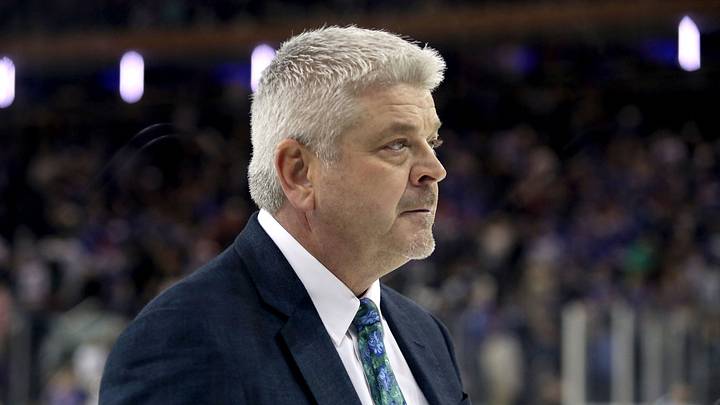
After two days of Shawn Horcoff and Dylan Larkin giving us next to nothing, the Todd McLellan press conferences actually answered questions. Real ones, with real substance behind them. Here's what stood out:
Todd McLellan's read on Marco Kasper
McLellan went straight to the numbers on Kasper's shooting percentage collapse. He pointed out that two seasons ago Kasper was running a stretch around 32 percent, and compared that directly to Alex Ovechkin, the best goal scorer on the planet, who's never sustained anything close to that number over any real stretch. His point was simple. You take the unsustainable high and the miserable low from last season, find the real number in between, and that's roughly where Kasper should actually land.

McLellan thinks Kasper benefits from the spotlight being somewhere else this year. With the Larkin situation eating every headline, McLellan's expectation is a Kasper with less external pressure playing his game instead of trying to justify a draft slot in front of cameras every night.
I buy that.
A guy who finished first on the team in hits last season clearly never stopped competing. What he may need is the noise pointed at someone else. This offseason gave him exactly that (for reasons nobody wanted).
The next leadership group has names now
When asked about the exits of Patrick Kane, James van Riemsdyk, and Travis Hamonic, McLellan didn't dodge it. Losing a Hall of Famer isn't going to be smooth, full stop. But he was specific about who steps into that gap: Lucas Raymond, Alex DeBrincat, Moritz Seider and Simon Edvinsson.
His reasoning matters as much as the names. He said flatly that that group isn't a bunch of kids anymore; they're mid-20s players who've been through enough to start carrying real weight in that room. That's a coach publicly handing the keys to the next generation. It's a real answer instead of vague talk about "leadership by committee."
Camp is shorter, and it sucks
With only two preseason games available to veterans this year instead of the usual longer exhibition slate, McLellan's message was urgency, right now, not a slow build. He was blunt about how roster spots actually get decided too: the coaches don't pick the team, the players do, by playing themselves in or out.
That's exactly the framework MBN is operating under. McLellan pointed to his run in Grand Rapids and all but said he expects him to force his way onto the Detroit roster, catching himself mid-sentence before fully committing to it. Combine that with Carter Bear also gunning for a spot at the same position, and camp actually had real stakes attached to it for once.
Toughness has a face, or faces
When asked about replacing the offense that walked out the door, Todd reframed the question entirely. His stated belief is that a tougher team spends more time in the offensive zone by default, which turns physicality into offense instead of treating them as separate goals.
He's made this same case publicly before, and at the McLellan press conference, he named MBN, Viktor Arvidsson and Keegan Kolesar specifically as the answer, noting he'd already worked with Arvidsson in Los Angeles. Kasper led the team in hits last season by himself. McLellan's version of this team wants that to be a group effort instead of one guy's job.
He cleared up the jerseys line, and gave a real answer on the March collapse
McLellan said the "jerseys" comment was said exactly once, to set a tone, and the room got the message. Everything after that was the media repeating it, not him. Fair distinction. On the actual March collapses, though, he gave a genuinely interesting answer: he thinks the team has psychologically expected it to happen for so many years running that the expectation itself became part of the problem.
His fix isn't complicated. Stop talking about March in September, focus on winning the day in front of you and stop carrying four years of bad Marches into a fifth one before the calendar even gets there.
Let's see how preseason shakes out
Horcoff gave us deflection. Larkin gave us almost nothing. The Todd McLellan pressers gave us actual hockey answers, backed by real names and real reasoning, on the two guys who need to bounce back, the four guys who need to lead, and the three guys who are supposed to make this team harder to play against.
At least one person in this organization is treating the lead-up like it matters.
 Add us as a preferred source on Google