

Ten years without playoff hockey is a number that should concern everyone associated with the Detroit Red Wings organization. For a franchise that built its identity around consistency and postseason success, missing the playoffs for nearly a decade is not the standard fans expect.
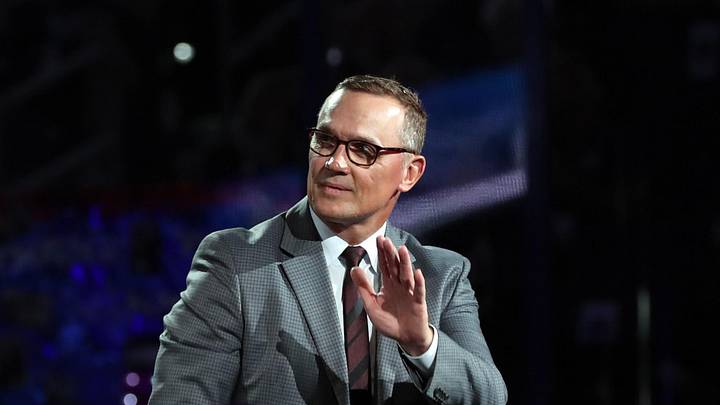
When Steve Yzerman returned to Detroit in 2019, he inherited a difficult situation and was tasked with rebuilding an organization that had fallen behind the rest of the league. Patience was always going to be required, but after several seasons of waiting and gradual progress, it is fair to question whether the roster construction philosophy itself needs to change.
Over the last three seasons, Yzerman has built teams that feel caught between two timelines. Detroit has continuously added veteran players through trades and free agency while attempting to blend them with prospects and players entering their prime years.
Steve Yzerman said Chris Ilitch and Red Wings ownership is disappointed for the way the season ended up.
— Brad Galli (@BradGalli) April 23, 2026
As for his own job security, Yzerman said: “I intend to do my job to the best of my ability and I intend to see this through.” pic.twitter.com/iKtuy4w16U
The strategy appears to be creating a balance between experience and youth. In theory, experienced players help stabilize a young roster while prospects develop. The problem is that the league continues moving toward speed, skill and younger stars driving team success.
The comparison
Detroit's top five point producers this season consisted of Dylan Larkin, Alex DeBrincat, Patrick Kane, Lucas Raymond and Moritz Seider. Three of those players were over the age of 27 in Larkin, DeBrincat and Kane, while Raymond and Seider represent the younger core.

There is nothing wrong with veteran production, but it becomes a concern when the majority of your offensive leadership is carried by players approaching or already beyond the traditional prime years for NHL players.
A comparison to the Montreal Canadiens highlights the issue. Montreal reached the playoffs this season and recently won a Game 7 overtime matchup against Buffalo in the second round. During the regular season, the Canadiens' top five-point producers were all under 27 years old. In the playoffs, their top five scorers also remained under 27.
Newhook with the GWG! The #GoHabsGo win it in OT and are moving on to face the Carolina Hurricanes in the Eastern Conference Final!
— David Pagnotta (@TheFourthPeriod) May 19, 2026
The age difference between the two teams as a whole is difficult to ignore. Detroit ended the season as the fifth-oldest team in the NHL with an average age of 29.76 years old. Montreal is the second-youngest team in hockey at just 25.61 years old. That four-year gap across an entire roster is substantial.
Younger teams bring more to the table
Younger teams typically bring more speed, energy, and growth potential. More importantly, they are improving together. Players in their early and mid-twenties are still ascending, whereas veteran-heavy teams often rely on maintaining production rather than building toward it.
Roster age across the entire lineup also tells a larger story. Montreal currently has just four players aged 27 or older, where Detroit has 14 players who are 27 or older on its roster.

The production numbers further support the comparison. Montreal's top five point scorers combined for 141 goals this season. Detroit's top five scored 126 goals. While a 15-goal difference may not sound massive, over the course of an 82-game season it can easily become the difference between making the playoffs and watching from home.
The point totals create an even wider gap. Montreal's top five players produced 402 points, while Detroit's top five totaled only 345. That is a 57-point difference from the players expected to drive offensive success.

Yzerman's approach moving forward
The Red Wings are approaching another important offseason decision. Detroit has five unrestricted free agents over the age of 35 in David Perron, James van Riemsdyk, Patrick Kane, Travis Hamonic, and Cam Talbot. Out of that group, Kane should be the only player seriously considered for another contract, and even then in a secondary scoring role for one or two seasons.
Yzerman's approach moving forward should focus less on filling roster spots with aging veterans and more on adding players with upside and long-term value. Detroit already has prospects knocking on the door including Nate Danielson, Carter Mazur, Axel Sandin Pellikka, Michael Brandsegg-Nygard, Sebastian Cossa, Michal Postava and Anton Johansson.
AXEL SANDIN PELLIKKA 🚨 what a move !#LGRW pic.twitter.com/6DDC4hKRvU
— Red Wings Prospects (@LGRWProspects) May 9, 2026
There are two paths available this offseason. The first is allowing young talent from within the organization to finally earn meaningful opportunities. The second is aggressively targeting players under 27 years old who fit the core timeline of Larkin, DeBrincat, Raymond and Seider.
Detroit has spent years building a prospect pipeline. Eventually, there comes a point where a rebuild stops being about collecting assets and starts being about trusting them. That time may finally be here.
Elliotte Friedman: Re Red Wings: If they don't make a big trade...or a big move this summer of some kind, people are gonna be shocked, and [Yzerman's] walked himself into a position where he almost has to do it - 32 Thoughts (4/24)
— NHL Rumour Report (@NHLRumourReport) April 27, 2026
 Add us as a preferred source on Google